
Caring for Dogs Before and After Surgery
Also see these articles:
Disclaimer: I am not a veterinarian, nor do I have any formal training in any medical field. The information presented here is not meant to replace your vet's advice or prescribed medications, but only to suggest additional options to explore, based on your dog's condition.
Pain Relief
PLEASE, if possible, talk to your vet about pain relief prior to bringing your dog home! Adequate pain relief is important, not just for humane reasons, but because it speeds recovery and healing. Please do not wait until your dog is in pain to discover that your vet did not give you anything for pain, or sent you home with Rimadyl and you're afraid to use it.
See Who'll stop the pain: Veterinarians can ease the hurt for more info.For GENTLE pain relief, use Willow Bark, which is similar to aspirin but may not be as hard on the stomach; it should still be given only with food. Tasha's Herbspirin (willow bark) also contains flower remedies, which may help your dog relax. Aspirin can be given to dogs (not cats), but it is very hard on the stomach, and should be given only with food, and preferably in a buffered form, with an antacid such as calcium carbonate, aluminum hydroxide, and/or magnesium hydroxide. Do not combine Aspirin with Willow Bark or any NSAID, such as Rimadyl or Deramaxx, or with prednisone (see the section on NSAIDs in my Chronic Pain page for more information). Recommended dosage for aspirin ranges from 5-15 mg/lb every 8 to 12 hours, but the lower end of that range is safer. See Giving Your Dog Aspirin for more information. Some people recommend Arnica 30c (or higher potency, such as 200c) homeopathic pellets; although I'm not a believer in homeopathy, this won't do any harm as long as you also use other means of pain control if needed.
For GREATER pain relief, :
- Tramadol is a synthetic opioid that is safer than most narcotics, and is easier to get as it is not a controlled substance. See Christie Keith's blog on Tramadol for more info. Chronic Pain Management and Tramadol (scroll down to find the sections on Tramadol) have some information on dosage for dogs. Tramadol is safe even for long-term use with chronic pain. It can be combined with other drugs, such as NSAIDs.
- NSAIDs (non-steroidal anti-inflammatory drugs) are often used. These drugs vary in safety, but all can cause gastric upset and ulceration, so it is important to give them with meals, and to discontinue immediately and contact your vet if you see any signs of problems, including vomiting, loss of appetite, lethargy, diarrhea, change in drinking or urination, etc. Ask your vet about giving an injection of one of these drugs before the dog goes home, which will bypass any potential gastric problems and avoid the need to give with a meal on the day of surgery. If you use NSAIDs, I think that Metacam (meloxicam) and Etogesic (etodolac) may be safer than Rimadyl (carprofen) or Deramaxx (deracoxib), though all NSAIDs can cause problems. Metacam may actually be more likely to cause gastrointestinal problems than the others, but I have heard more reports of Rimadyl and Deramaxx causing death shortly after starting them, due to liver or kidney failure. It is best if you do bloodwork to ensure that your dog does not have liver or kidney disease before using any NSAID (or anesthesia). Another NSAID that is used after surgery is Ketofen (ketoprofen, single dose only). Never combine NSAIDs with aspirin, or switch from aspirin to an NSAID without waiting at least a week in between, both of which can cause very serious adverse effects.
- Buprenex/Simbadol (buprenorphine) is a good pain reliever when injected, but it's less effective when given orally (bioavailability averages 38% for a standard dose, so higher doses are needed). If used orally, it should be given in liquid form and slowly squirted into the cheek pouch, where it is absorbed through the mucous membranes. Buprenex is deactivated once it reaches the stomach. If you know how to give sub-q injections, your vet may let you take some syringes home with measured dosages to give to help keep your dog comfortable, especially in the first 24 hours or so following invasive surgery. You can also ask your vet to give your dog an injectin of Buprenex shortly before taking him home (note that larger doses last longer rather than increasing the effect). There is a sustained release version that can provide pain relief for up to 72 hours.
If your dog has been on any NSAID (including aspirin) or on prednisone prior to surgery, do not switch to a different NSAID unless you stop the first drug for at least a few days (or a week, if switching from aspirin to an NSAID). It is important that the old drug be completely cleared from the system before starting the new one. Interactions between the two can be dangerous. I heard from one vet that fatal reactions to Deramaxx were much more likely in dogs that had been given Aspirin in the preceding 7-14 days.
More Information:
- Treating Chronic Pain in Dogs: NSAIDS
- Overview of NSAIDS on the Senior Dogs site
- See Perioperative Use of Nonsteroidal Anti-Inflammatory Analgesics and Pain in Dogs for more information on the use of these types of drugs for post-surgical pain. The article on Non-steroidal Anti-inflammatory Drugs for Small Animal Practitioners (about half way down the page) has extensive information about different NSAIDs and their risk factors.
- Rimadyl
- Carprofen (Rimadyl, Novox, Vetprofen)
- Understanding Deramaxx®
- Talk to your vet about using Nocita during surgery, a long-acting local anesthetic that uses extended-release bupivacaine that provides up to 72 hours of pain relief following cruciate surgery.
- Duragesic (Fentanyl Patch). For best results, this patch should be applied several hours or even the day before the surgery. Note that fentanyl can cause respiratory depression, especially when used in high doses, so be alert for signs of problems and contact your vet right away if you suspect any. If in doubt, and your dog is having ANY problems breathing, remove the patch right away yourself and then get your dog to the vet. Sighthounds, with little body fat, may have more trouble than other breeds. See For Tootsie for more information on potential problems -- I still consider this drug safer and more effective than NSAIDs, but whatever you use, you must be alert to signs that your dog is in trouble and react quickly.
- Morphine, Oxycodone (Oxycontin) and Hydrocodone Bitartrate are other narcotics that can be used for dogs.
- See Alternatives for the opioid shortage, or Simbadol [buprenorphine] saves the day for more information about alternatives when opiates are in short supply.
Not recommended (but commonly used):
- Torbutrol/Torbugesic (butorphanol), a mild narcotic, is not recommended. Its effect is limited (especially if given orally rather than injected), it lasts for less than one hour (maybe no more than 15 minutes), and it may actually interfere with the body's own pain control. It is also one of the drugs that Collies and related breeds may react to. See Forget the Torbugesic for more information.
For more technical information on pain relief, refer (or have your vet refer) to AAHA/AAFP Pain Management
Guidelines for Dogs & Cats and Pain Management at the Veterinary Anesthesia Support Group. Also see their four-part article on Peri-Operative Pain Management: Looking Beyond Butorphanol:
- Part 1 covers the need for pain management, and the use of pre-anesthesia drugs for pain control.
- Part 2 gives detailed information on the use of opioids, butorphanol and buprenorphine.
- Part 3 gives detailed information on various drugs, including sedatives/tranquilizers, medetomidine (Domitor), benzodiazepines, ketamine, amantadine, and NSAIDs.
- Part 4 gives detailed information on local anesthetics, anticonvulsants, constant rate infusions, transdermal drug delivery, epidermal injections, and drugs that can be used at home after surgery.
Also, talk to the surgeon and/or anesthesiologist about an epidural. I think such usage is fairly new, but the results can be amazing, especially for orthopedic surgeries. See the article A painless approach to pain management and Epidurals at the Veterinary Anesthesia Support Group for more information on these drugs and procedures.
If you use any of these drugs, discontinue and notify your vet immediately if your dog shows any signs of problems whatsoever. These may include any of the following: vomiting, diarrhea, dark or bloody stools, changes in appetite, changes in the frequency or or amount of urination and drinking, yellowing of the whites of the eyes, or any behavioral change such as aggression or lethargy, disorientation, staring off into space, circling, lack of coordination when walking, or hyperactivity. Never give your dog human medications such as Tylenol (Acetaminophen), Advil (ibuprofen), or Aleve (naproxen), they can be very dangerous for dogs (and even more so for cats). Aspirin is OK, particularly the buffered kind, if given with food (do not give aspirin to cats). Note that aspirin can be dangerous if given within one to two weeks of other NSAIDs such as Rimadyl, Deramaxx, or Metacam. See the section on NSAIDs in my Chronic Pain page for more information.
Holistic alternatives include very high potency Arnica, such as 1M, or other specific homeopathic remedy, and acupuncture. Acupuncture has been shown to be effective in relieving pain; many people believe that homeopathy is helpful, though I am not one of them.
For more information on pain management, see the following articles by Christie Keith:
- Pain in Dogs and Cats: Basics and Introduction
- Pain in Dogs and Cats: What You Can Do About It
- Serious Chronic and Acute Pain, and Surgery
Also see Pain Control in Your Dog and Cat for a good overview of the different types of medications available.
Your vet may be interested in Options for Analgesia in Dogs, by L.A. Wetmore, a comprehensive article on current pain management techniques before, during and after surgery. Available to veterinarians at www.ivis.org.
See Owner advocacy makes the difference for pets in pain for a detailed description of signs to look for that may indicate your pet is in pain.
Anesthesia
You may want to ask your vet what kind of anesthesia will be used, as the older drug Halothane is not considered as safe as Isoflurane and other newer anesthetics.If you have a dog prone to seizures, talk to your vet about avoiding the use of phenothiazine tranquilizers (such as acepromazine) and ketamine.
Certain breeds are thought to have problems with certain drugs, including Belgian Shepherds, Greyhounds and other Sighthounds, Brachycephalic dogs (such as Bulldogs and Pugs), and Mastiffs, Boxers and Bull Terriers (Acepromazine), so be sure your vet is aware of this before your dog has surgery. The Handbook of Veterinary Drugs says "Giant breeds, as well as greyhounds, appear quite sensitive to the clinical effects of the drug [Acepromazine], yet terrier breeds appear more resistant. Boxer dogs, on the other hand, are predisposed to hypotensive and bradycardic effects of the drug."
Acepromazine (Ace) and butorphanol (Torbutrol, Torbugesic) are among the drugs that certain breeds may be sensitive to. The MDR1 mutation causes multidrug sensitivity in some breeds, including Australian Shepherds (standard and miniature), Border Collies, Collies, English Shepherds, German Shepherds, Longhaired Whippets, McNabs, Old English Sheepdogs, Shetland Sheepdogs, Silken Windhounds, and mixed-breed dogs from any of these breeds (see Dogs with a Drug Problem for information about other drugs these breeds may be sensitive to, which include ivermectin, Imodium, certain chemotherapy drugs, and others).
More information:
- Your Pet is Going to be Anesthetized... an excellent article on anesthesia issues.
- Canine Anesthesia: Special Considerations Based on Breed, Size, and Conformation
- For more technical info, refer to the Veterinary Anesthesia Support Group
Before Surgery
You should stop most supplements a few days before the surgery, and maybe for a day or two after, as many of them can cause bleeding, including flaxseed oil, evening primrose oil, borage oil, garlic, ginger,ginkgo biloba, ginseng, high-dose vitamin E, and white willow bark. Chondroitin may also increase bleeding, but glucosamine apparently does not. Bromelain and other proteolytic enzymes may also increase bleeding. MSM apparently can occasionally act as a blood thinner as well. Other herbs that may cause blood thinning include alfalfa, chamomile, hawthorne, meadowsweet, dong guai, saw palmetto, turmeric/curcumin/bioperine/piperine, bilberry, feverfew, red clover and some mushrooms. Although there has been concern in the past that high doses of fish oil may increase the risk of bleeding in people undergoing surgery, a large study found taking high-dose prescription fish oil did not increase bleeding during or after cardiac surgery. See When Herbs and Surgery Don’t Mix for more info.
In addition, high doses of Vitamin C may interfere with anesthesia, so again, best to discontinue for at least a day or two before surgery.
Note that aspirin is a potent blood thinner and should not be given for 7 days prior to surgery, even in small amounts. If your dog has had aspirin in the week before surgery, be sure your veterinarian knows about this.
My dog threw up dried yams (rawhide chew substitute that she had been given the day before) following surgery, so I think it's a good idea to avoid giving any kind of chew that might not be digested quickly for a couple of days before surgery.
An herbal immune booster, such as Tasha's Immune Formula, can be given both before and after surgery to help build up their immune systems and fight off any infections. Milk Thistle given before and after surgery may also help protect the liver from any effects of anesthesia.
See 10 Questions to ask your Veterinarian before Surgery for other factors you may want to think about.
After Surgery
Milk Thistle or Tasha's Detox Formula can be given for a week after surgery to help detoxify from the anesthesia. Ginger (capsules or fresh) can be given to help with nausea from anesthesia.On the incision itself, you can use aloe to help it heal and to soothe. Be sure to apply with something sterile, like a Q-tip, or just squirt the ointment directly on the incision without using your fingers, so you don't contaminate the wound with bacteria. Califlora (calendula) gel can also be used on the wound to heal and soothe. Colloidal silver will help prevent infection and heal without scarring, but if the wound is draining, you may want to wait so it doesn't close up too fast. The same is true of Calendula. Colloidal silver can also be given internally, to help prevent infection (see Silver makes antibiotics thousands of times more effective). Arnica gel, Traumeel and Rescue Remedy cream can be used around the wound, but not directly on it. You should be able to find all of these at your local health food store, or even ordinary drug store. Warm compresses may be helpful, especially if the wound is draining. If things aren't looking good around the incision site, and you suspect cellulitis (the tissue around the wound seems hard), hot compresses 3 times daily with the herb plantain can help. If necessary, Bitter Orange/Apple can be applied around the incision but not directly on it to help prevent licking. Vitamin E can be applied to the incision after it has healed to soften the skin and possibly reduce scarring, but research shows that topical vitamin E may actually slow wound healing and increase scarring if applied immediately after surgery, and may cause a skin reaction as well.
Vitamins, especially vitamins C and E, may help with wound healing. This may be a good time to give your dog a multi-vitamin even if you do not do so normally. When using vitamin C, it is best to increase the dosage gradually, as too much can cause loose stools. Note that most multi-vitamin products made for dogs contain too little of anything to be very useful, and human multi-vitamins may contain minerals in inappropriate amounts. See the human oriented article, Vitamin C and Diet Speeds Recovery From Oral Surgery Wounds and the Google book excerpt from Nutrition and Wound Healing for more information.
If antibiotics are used, you should give Probiotics for up to six months following the antibiotic usage, to help restore the beneficial microorganisms in the gut that the antibiotics kill off (along with the bad ones). You can use Acidophilus, but I think it is better to include multiple strains of bacteria. Be warned that Fastrack and some probiotics that include lactose have been known to cause diarrhea in some dogs. Yogurt with added probiotics is another source (regular yogurt's "live cultures" just refer to the bacteria used to make yogurt, not probiotics)..
If your dog had abdominal surgery and you feed raw meaty bones, it may be best to discontinue the bones until the incisions are completely healed (around 10-14 days), and then gradually add them back in. During this time, you can grind them up, or just feed meat with 1/2 teaspoon ground eggshell per pound of meat added back in to balance the calcium/phosphorus ratios.
Note that fish oil, by suppressing inflammation, can also suppress wound healing, so best to wait five days after surgery before resuming this supplement. See Fish Oil: The Dangers of Too Much for more information.
See this video for some activities you can do with your dog while recuperating from surgery: Crate Rest Activities for Dogs after Back, Hip, Leg Injuries, ACL or TPLO, Heartworm treatment, etc.
Recovery Aids
See the following for alternatives to the large plastic e-collars used to keep dogs from getting at their stitches, and other post-surgical aids. Also see the American Association of Rehabilitation Veterinarians for help finding a veterinarian who does physical therapy and can help with fitting braces, wheelchairs, and such.
E-Collar ("Cone") Alternatives
- Novaguard from Protective Pet Solutions offers a different design that leaves the ears free and allows full vision.
- This company also offers the Optivizor for eye and face protection. I used the Optivizor for my dog following eye surgery in 2008, and was very happy with it, but the product has both greatly improved and come down in price since then. I am currently using a tinted Optivizor as a sun visor for walks, as my older dog was having trouble with the glare.
- ProCollar (also available at Petco and Petsmart). High rating from WDJ.
- Neck's Best Thing Collar
- Bite Not Collar
- Soft-E-Collar from Furminator, also available at Jorgensen Labs
- Pet Botanics E-Collar
- Trimline Veterinary Recovery Collar, also available at Amazon
- Comfy Cone, also available at Drugstore.com and Amazon
- Flexy E-Collar
- Foam Collar
- Kong E-Collar
- BooBooLoon Also see Watch out for the stitches: Protection that works for more info.
- Optivizor protects the eyes following eye surgery. This company also offers Novaguard, which is more like a regular e-collar except that it covers the face only, rather than the ears and neck (see video). Now available through Big Dee's Dog House. There is also a distributor in Canada, AVENTIX, who will ship to the US. Can also be shipped directly from the company in Australia if needed. See Optivizor and Novaguard Facebook page for more info.
- Travel Pillow Large dogs may be able to use an inflatable pillow such a this, which fits around the neck and is made for people to use on airlines.
Body Suits, Coverings and Boots (some can also work in place of an e-collar)
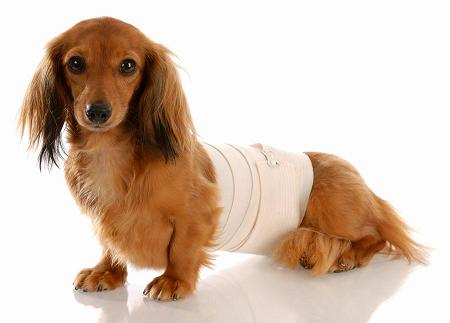
- Suitical offers Recovery Suits that cover the dog's trunk, and Recovery Sleeves that covers either front leg. These can provide wound and hot spot protection, and prevent trauma from scratching or licking. It can also be used for dogs in heat or that are incontinent.
- Goldpaw now offers onesies in addition to its other stretch fleece coverings. I've used their stretch fleece shirts (single and double layer) and raincoat for my own dog and the quality is great.
- PawFlex offers non-adhesive bandages that are water resistant and breathable. They also offer waterproof coverings.
- K9 Top Coat Stretchable body suit to cover wounds.
- Lick Sleeve shields your dog's injured hind leg from destructive licking that can be used in place of a cone. Developed by a veterinary surgeon.
- DogLeggs Coverings for elbows and hocks (for comfort, hygromas, calluses), carpal brace (for carpal ligament problems), booties and more.
- K-9 Callus Cuffs are handmade to provide comfort and protection for elbows with calluses, hygromas, swelling, or pressure sores.
- Canine Elbow Protective Sleeve from Canine Angels, Inc., for elbow wounds and hygromas.
- Lick Sleeve is a form-fitting cover for a dog's rear leg. Designed by a veterinary orthopedic surgeon. Medium and large dogs only.
- WoundWear Full and partial body suits.
- Happy-ONE-See Veterinary approved post-surgery body suit. Also see SavvyPooch Facebook page.
- Thera-Paw Boots Dog Boots to protect painful and injured paws. Also makes Sticky-Pawz rubber dog boots from Thera-Paw, similar to Pawz Dog Boots below.
- Dog Footwear from HandicappedPets.com
- Healers Pet Medical Dog Boots Easy to put on and take off. Breathable material that wicks away moisture. Gauze inserts fit the boots. See Booties for dogs: Protect and bandage paws for more info.
- Grippers Non Slip Dog Socks For indoor use to help with traction on smooth surfaces, from a company whose stroller I really like. Can be left on for long periods after the dog gets used to them but should be removed at night..
- Pawz Dog Boots Can provide traction for dogs with weak rears, but be careful about leaving them on for too long, as moisture could lead to yeast infections and other problems. See Why I REALLY Love Booties for Dogs for more info. See reviews of these and other boots at Tripawds (use their links to buy and they will get a small percentage of the purchase price). One person reported to me that they were hard to get on and didn't help with traction for her dog.
- Power Paws Dog Socks with non-slip bottoms.
- PawTectors Dog Boots. Recommended by someone with older dogs for traction on slippery floors. Waterproof.
- AllDogBoots offers orthopedic, non-slip, wound covering, and protective foot coverings.
- Tripawds Gear offers jackets, boots, pads, harnesses, and more.
- Neo-Paws Shoes and Boots that can offer good footing for dogs having problems with slick floors. Can even be worn in the water.
- Dr. Buzby's ToeGrips are applied to the toe nails and stay on with friction. They are most helpful for dogs who slip on slick surfaces; they don't work as well for dogs with neurolgical disorders that cause them to drag their feet. See their FAQ for more information.
- Neo-Paws Shoes and Boots that can offer good footing for dogs having problems with slick floors. Can even be worn in the water.
Ice and Heat Packs
- Canine Icers Wraps designed for holding ice or warming packs for knees, hocks, elbows, shoulders and more. Also offers carpal (wrist) supports.
- Bellas Hot/Cold Pain Relief Pack
- Pet Therapy Jacket from Warm Whiskers
- Canine Icer & Heat Wraps
Support Harnesses and more
- RuffWear's Web Master Harness Can help to support a disabled dog. Highest rating from Whole Dog Journal. Available at SitStay and Tripawds.
- Help'Em Up Harness with Hip Lift A friend used this for her elderly Rottweiler and reported that it was much easier to use than other devices she had tried, plus was comfortable for the dog to wear so that it didn't have to be removed and put back on continually. Also recommended by WDJ.
- Dog Harnesses and Slings A wide variety of products recommended by HandicappedPets.com.
- Walkabout and WalkaBelly Harnesses Slings to help you support your dog, plus diapers and other help for dogs with orthopedic problems.
- Comfort Lift Carrier Sling to help you support your dog, also offers ramps, steps and orthopedic beds.
- AST Pet Support Suit and Get-A-Grip Dog Lift Harness Heavy-duty, full-body AST Support Suit that lets you help your dog to get around. Also offers the AST Get-A-Grip Dog Lift Harness. Pet Support Suits are custom built to your dog’s measurements. Get-a-Grip Harnesses are available in three standard sizes.
- PetSafe Solvit CareLift Support Harness Available in full and rear-only styles. Also available at Amazon.
- Hartman's Hip Helper Full-body harness that can be left on, for medium to large dogs weak in the rear.
- Bottoms Up Harness can be left on your dog, allowing you to provide help getting up.
- Dog Support Slings from Doggon' Wheels. Front and Rear Support Slings.
- Guardian Gear Lift & Lead 4-In-1 Dog Harness Inexpensive support harness for both front and rear.
- Mobility Sling Mid-region support
- Products for Arthritic Dogs Links to several sites that offer slings and supports for dogs.
- Stretchers and Slings for big dogs
- Biko Physio Brace for dogs with Degenerative Myelopathy. Available from Animal Rehabilitation and Wellness Hospital.
- Tripawds Gear offers harnesses, jackets, boots, pads, and more.
Braces, Splints, Orthotics and Prosthetics
- See Canine Knee Injury? Brace Yourself for an article by CJ Puotinen on custom braces for cruciate injuries.
- Posh Dog Knee Brace Customized fit with assistance from the company, which also provides detailed rehab instructions. May help to heal cruciate (CCL) injuries without surgery, particularly if the ligament is not fully torn. A friend used one in 2020 on her young, very active Labrador Retriever with a sprained (not torn) CCL, and she recovered with a month of restricted (on-leash only) activity. Expensive, but worth it to get the fit right.
- Thera-Paw Assistive and Rehabilitative Products include splints, wraps, and "Dorsi-Flex Assist" for both front and rear limbs. Can help with knuckling over and other problems caused by nerologic deficits such as degenerative myelopathy and disc disease. Can also help with wrist (carpal) injuries and hyperextension.
- Ortho Vet Splints Provides support for lower limb injuries, and prevents knuckling due to nerve paralysis.
- WoundWear Knee brace for cruciate injuries.
- MuttKnee Brace for cruciate injuries.
- Canine Bracing Custom orthopedic leg brace for dogs
- Dog Splints, Orthotic & Prosthetic Pet Braces for Injured Legs from HandicappedPets
- OrthoPets Custom Orthotic and Prosthetic devices for pets.
- A recent study at the University of Kentucky has shown that the Ortho Pets custom knee brace is extremely effective in normalizing the biomechanics of the knee in patients with a ruptured ACL ligament.
- Another study published in 2016 on owner satisfaction with the results of wearing a custom knee brace from this company for dogs with a ruptured cruciate ligament found that most owners were happy with the outcome. See Cruciate Ligament Disease: A Comparison of Surgical and Nonsurgical Treatment Outcomes for more details. Also see Followup: Canine Cruciate Ligament Disease and To brace, or not to brace? A commentary on options for treating cranial cruciate ligament disease for more information on the use of a brace for cruciate support.
- My Pet's Brace provides orthotic and prosthetic solutions for front and hind leg injuries and etiologies in dogs, cats and other animals. They also provide innovative assistive devices for the spine and other orthopedic conditions in animals.
- Canadian Animal Rehab Services Custom made braces, pads, walking supports and "wheelchairs."
- Canine Orthopedic Leg Braces Custom orthopedic leg braces.
- K-9 Orthotics Orthotic and prosthetic devices for dogs.
- Canine Icer Carpal Wrap Provides flexible or rigid support for dogs recovering from injury or for use during practice sessions to reduce stress on the legs.
Wheelchairs and Carts
- Eddie's Wheels Wheelchairs for dogs.
- Walkin' Wheels Wheelchair for dogs from HandicappedPets. Short-term rentals also available. Also see Small Carts, Custom Carts and Homemade Carts.
- Doggon' Wheels Front, rear, and all wheel drive wheelchairs, including quad support for dogs with spinal problems or weakness in all limbs, plus slings, splints and more. Available in several countries, including the US, Mexico, UK, France, Germany, Australia, New Zealand and Japan.
- K9 Carts Offers andmade wheelchairs, including one that offers full (not just rear leg) support, along with harnesses and incontinence aids. Short-term rentals also available. This company also donates a number of wheelchairs per year to various charitable pet organizations and individual pet owners in need.
- TurboRoo Designs Custom carts for small dogs, created with a 3D printer. Cost is $300 as of the end of 2014.
- Canine Wheelchair Project Instructions for making a homemade wheelchair.
- Paws to Wheels Specializing in wheelchairs for dogs of all sizes.
- Wheelchair Instructions for making a homemade wheelchair, be sure to read the comments for additional hints.
- DogKarts Instructions for turning a human wheelchair into a wheelchair for a large dog.
- Canadian Animal Rehab Services -- custom made wheelchairs.
- Dewey's Wheelchairs for Dogs
- K-9 Carts also offers cart rentals, and Protect-A-Pet protective gear for paralyzed pets
- K-9 Cart East The original patented dog wheelchair company for paralyzed pets developed and owned by a veterinary orthopedic surgeon.
More Products for Handicapped Pets
- Handicapped Pets Products, services and support for disabled and handicapped pets.
- Dog Mobility Products for disabled dogs. Also see Spanna for information on Degenerative Myelopathy.
See Also:
- Comfort Aids Products to help dogs with arthritis or other problems that cause difficulty getting up and around.
- Back Disorders Information & Support Extensive links on everything related to back and orthopedic problems.
- Email Support Groups see Degenerative Myelopathy, Disc Disease, and Orthopedic Problems categories.
- Convalescent Support for Your Dog and Post-Surgical Home Preparation (blog posts from someone who cared for a paralyzed dog who later recovered)
Purdue College of Veterinary Medicine's Center for Paralysis Research is doing research on new treatments for spinal cord injuries, including PEG-mediated neural repair (PEG is short for Polyethylene Glycol) that has been used successfully for some dogs if treated within 72 hours of suffering a spinal injury. I had trouble with the links on that page; you can get to them from this Research Areas page, though they appear to be out of date. Also see their Office of Veterinary Clinical Trials.
I regret that I no longer have much time to respond to questions. See my Contact page for more information. My name is Mary Straus and you can email me at either or